
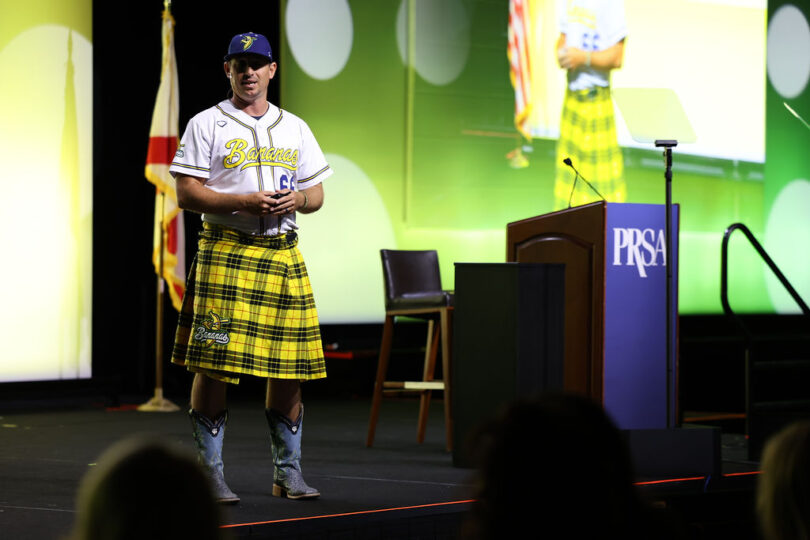
Tyler Gillum knows how to make an entrance.
The head coach of the Savannah Bananas jogged into the ballroom at the Orlando World Center Marriott from the back, high-fiving attendees as he made his way to the stage for his Oct. 18 keynote at PRSA ICON 2026.
Dressed in cowboy boots and a kilt — nods to his Oklahoma upbringing and the team’s Savannah roots — Gillum brought the same energy that has helped make the Bananas a sensation in the sports world.
But beyond the dancing players, unconventional promotions and audience participation, Gillum had a message for communications professionals: Creating memorable experiences starts with putting people first.
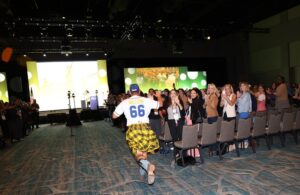
During his energetic presentation at the conference’s opening General Session, he shared lessons in leadership, innovation, and building lasting connections — all rooted in the Bananas’ guiding philosophy: fans first.
Bet on yourself
Gillum grew up in Ada, Okla., where baseball provided stability amid family struggles, including his mother’s death from an oxycodone overdose.
He credited his high school coach, Eddie Collins, with teaching him to set high standards and helping him find a path forward.
“Everybody’s a leader to somebody, and everybody can be that mentor to somebody,” Gillum told the student and professional attendees.
His coaching career involved taking chances that others questioned, including moving to Arizona to pursue opportunities without the promise of financial security.
Rather than chasing the highest-paying positions, he followed three priorities: “Learn, grow, network.”
Those decisions eventually led him to Savannah, where he connected with team owner Jesse Cole in 2017.
On their first video call, Cole appeared in his now-familiar yellow tuxedo and shared an ambitious goal: creating the greatest show in sports.
Banana Ball, the team’s fast-paced, entertainment-driven version of baseball, hadn’t been invented yet. But the vision was clear.
“You have to have the courage to be misunderstood to do things that have never been done before,” Gillum said.
Turn customers into lifelong fans
For the Bananas, putting fans first isn’t simply a slogan. It’s built into the experience, beginning before spectators enter the stadium.
Players greet arriving fans with handshakes, high-fives and hugs. They perform dances, interact with families and create opportunities for personal connections.
During the keynote, Gillum had ICON attendees stand and join the team’s signature “Hey Baby” dance.
He encouraged communicators to consider the first impressions they make on clients, colleagues and audiences.
“We talk about building fans. We don’t have customers,” he said. “How can you create fans for a lifetime?”
One example involved former player Michael Deeb, who turned the traditional autograph exchange around by inviting children to sign his jersey.
The jersey eventually became covered with signatures and was displayed at the National Baseball Hall of Fame in Cooperstown, N.Y.
For Gillum, the story illustrated the team’s “plus it” philosophy — finding ways to make an ordinary interaction more memorable.
The approach extends beyond the game itself, with players gathering for a postgame celebration to sign autographs, take photos and thank fans.
Gillum encouraged attendees to find similarly personal ways to strengthen relationships.
“Listen carefully and respond creatively,” he said.
Lead by example
Creating memorable experiences becomes more complicated as an organization grows. Yet Gillum said the Bananas hold a 15-minute meeting before each game to reinforce their fans-first philosophy and share examples of employees going beyond expectations.
The guiding principle is simple: “Do for one what you wish you could do for many.”
An employee may not be able to create an extraordinary experience for every spectator. But when hundreds of employees each make a special effort for one person, those interactions add up.
Gillum also emphasized that organizational culture depends on leaders demonstrating the behaviors they expect from others.
He shared a photograph of Emily Cole, co-owner of the Savannah Bananas, cutting weeds in the outfield with scissors during the COVID-19 pandemic.
With limited staffing and the organization trying to hold games safely, Cole took on a task far outside her normal responsibilities.
Gillum said the moment captured what leadership looks like when someone is willing to work alongside employees rather than simply issue instructions.
He also encouraged organizations to celebrate their people more often.
Instead of beginning every meeting with problems and assignments, he suggested recognizing employees who have made a difference.
Recognize potential in unexpected places
One of Gillum’s most memorable stories involved Reginald “Reggie the Legend,” a longtime stadium custodian who repeatedly contacted the Bananas seeking a job after the previous minor league team departed.
Once hired, Reggie became known for his enthusiasm and his daily declaration that it was a great day for baseball, regardless of the weather.
Gillum recalled inviting Reggie on a road trip, where he joined the team in the dugout and delivered motivational speeches.
The experience revealed how much his enthusiasm meant to the players.
Reggie, who has autism, eventually became a full-time motivational coach for the Bananas, traveling with the team and energizing players and fans.
Gillum said his presence changed the atmosphere around him and helped others perform better.
The story illustrated the importance of recognizing contributions beyond a conventional job description — and giving people opportunities to use their strengths.
Throughout his keynote, Gillum returned to the importance of taking chances, learning from setbacks and surrounding yourself with people who encourage growth.
Gillum closed by encouraging attendees to embrace challenges, continue taking chances and give others the opportunity to succeed.
“Think outside of the box. Do things differently,” he said. “There are always challenges, and you can overcome every one of those if you keep betting on yourselves, keep believing in everybody else, keep thinking outside of the box and empowering people to do great things.
“And if you do that,” he added, “I believe you can create something cool like this.”
Photos by Albert Chau