Every Hispanic Heritage Month, our industry publishes a version of the same piece: a celebration of culture, gratitude for representation, a call to do better next year.
Rarely does it ask the harder professional question — whether our own function is actually built to produce the kind of communication culture keeps proving works, or whether we’re just watching it happen from the outside.
This year, that question deserves a professional read, not a sentimental one. Because the most instructive communications story of the year didn’t come out of an agency. It came from a stage.
When culture out-strategizes us
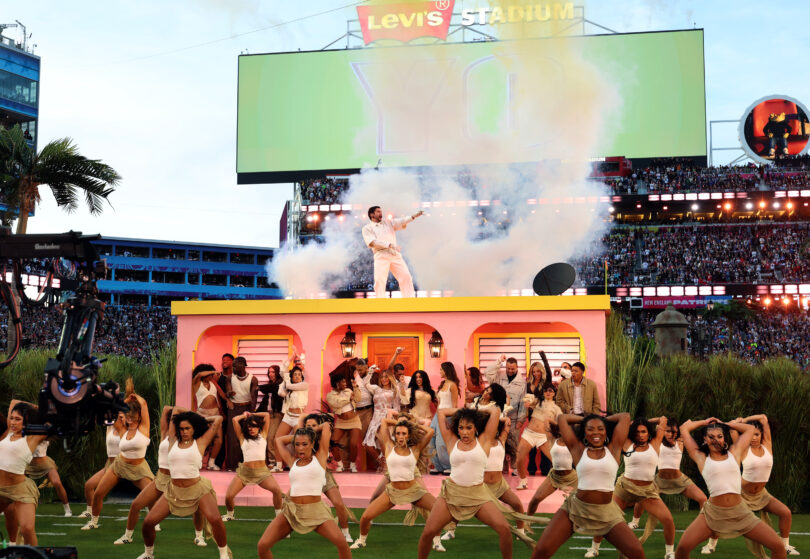
In February, Bad Bunny became the first artist to win Album of the Year at the Grammys for a Spanish-language record, then headlined the Super Bowl halftime show almost entirely in Spanish — another first for that stage.
Neither moment leaned on a slogan, and neither hedged who the message was for. Trade press saw the strategic stakes coming before he ever took the stage: PRWeek’s Nichimyo Rich flagged the booking, back in October 2025, as a marker for how brands approach multicultural representation. Once the show aired, Forbes contributor Esther Choy broke it down as a case study in aligning business strategy with cultural authenticity.
What made it work wasn’t “audience research” in the generic sense every PR plan claims to do.
It was something harder to teach: knowing exactly which cultural reference reads as pride instead of provocation, and having the standing to make that call with confidence.
Take the “El Apagón” segment, staged on replicas of the electrical poles tied to the island’s ongoing blackouts under Luma Energy — infrastructure criticism blunt enough to read as protest in less careful hands. Framed inside a set built around a casita porch, dominoes, and a real wedding performed live on stage, it read as home instead.
That’s not a talking point. It’s fluency, earned through lived experience — precisely the kind of judgment our profession says it wants more of at the strategy table.
The room where it should happen
Here’s the uncomfortable question: If a campaign like that had to be built inside a typical agency or in-house comms team, how many Hispanic or Latino professionals would actually be in the room shaping it?
According to the “2024 Race and Ethnicity in Communication Benchmark Report” (Report No. 5), published in March 2026 by the Diversity Action Alliance with data collection managed by the Institute for Public Relations, Hispanic and Latino employees make
up just 8% of the communications workforce among reporting organizations, and only 5% of executives and top leadership — a fraction of what our share of the U.S. population would suggest.
We applaud the outcome. We rarely fund the pipeline capable of producing it from inside our own function.
And the industry is choosing quiet.
That gap doesn’t sit still on its own — it compounds, because the same industry underrepresenting Hispanic and Latino talent at the top is also the one pulling back from the investments that could close it. It’s tempting to assume the profession will close that gap on its own, over time.
The data argues otherwise.“A Quiet Shift,” the 2026 Global Communication Report published this past March by the USC Annenberg Center for Public Relations with IABC and Meltwater, found that 41% of PR professionals now consider silence a legitimate defensive strategy, and that diversity, equity and inclusion is the single investment area most expected to shrink further over the next five years.
At the exact moment culture is proving, publicly and profitably, that specific and confident voices win, our own industry is finding itself pulled toward greater caution and vagueness.
Hispanic Heritage Month is often a moment to celebrate our voices. But visibility alone is not the same as influence. Being heard should also mean having a place in the rooms where decisions are made and strategies are shaped.
That starts with showing up somewhere concrete. Join PRSA’s Hispanic-Latino Affinity Group. Connect with the Hispanic Public Relations Association. Ask your own organization whether it reports its numbers to the Diversity Action Alliance — and if it doesn’t, ask why not.
And ask for something with teeth: a public commitment from your agency or in-house leadership to a three-year target for Hispanic and Latino representation in senior strategist and leadership roles — not just entry-level hiring — tracked and reported the same way DAA already tracks the industry.
Latino voices have always been worth hearing. Now they must also be present in the rooms where decisions are made.
Florencia Braña, a native of Argentina, is leader-elect of PRSA’s Hispanic-Latino Affinity Group and serves on its DEI Committee. She is committee administrator for PRSA New Pros and researches for nonprofits and health clients. Connect with her on LinkedIn.
Photo credit: Kevin Mazur/Getty Images Entertainment